
Who These Creators Actually Are
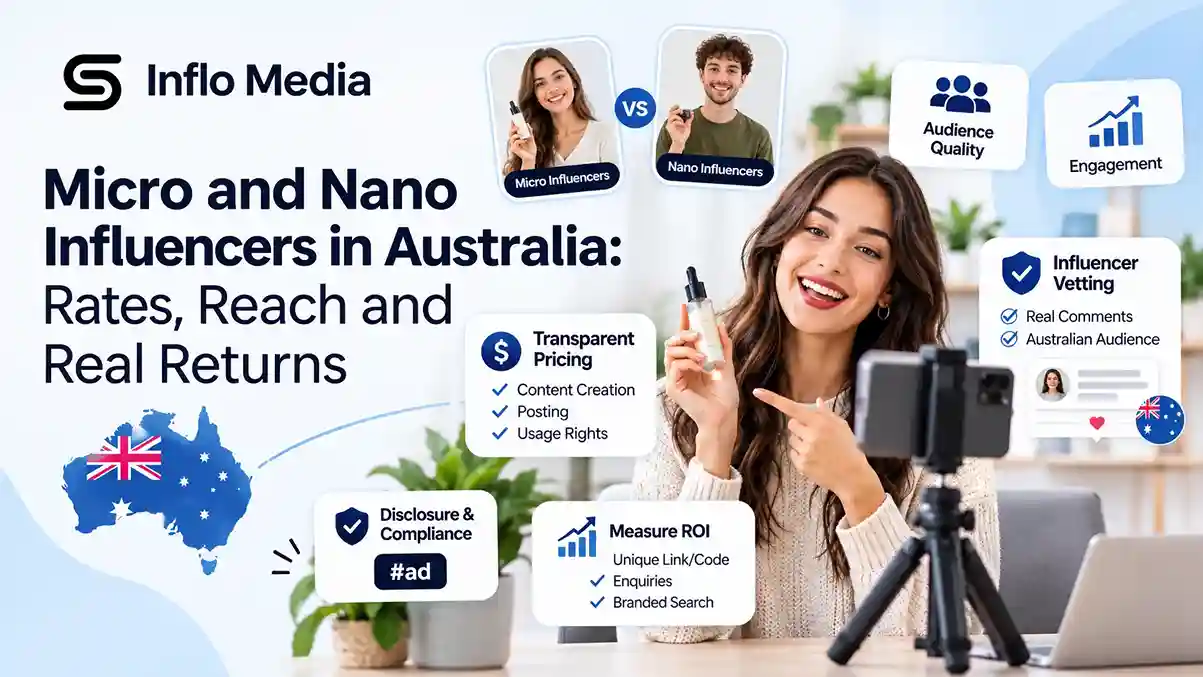
A micro influencer in Australia has roughly 10,000 to 100,000 followers. A nano influencer has under 10,000, sometimes under 2,000.
Those brackets are conventions rather than rules, and the numbers matter less than what sits behind them: a nano creator usually knows a meaningful share of their audience personally, and a micro creator usually doesn't but is still recognisably a person rather than a media property.
That difference is the whole argument for using them.
Why Small Outperforms Large in Australia Specifically
The Australian market is small enough that scale works differently here.
A creator with 500,000 followers in Australia is drawing from a national pool of 26 million. The same follower count in the US represents a far narrower slice of a far bigger market, which means the US creator is more likely to be genuinely niche. Our large accounts tend to be broad, which makes them expensive and imprecise for a service business.
Meanwhile a Melbourne food creator with 8,000 local followers is reaching almost exactly the people a Melbourne café wants.
Engagement follows the same curve. Smaller accounts reliably post higher engagement rates, partly because the audience is less diluted and partly because the creator is still replying to comments individually. Once an account stops answering, the relationship changes and so do the numbers.
We saw this directly with Dropout Chaiwala, an Indian chai café brand based in Melbourne CBD. The social and influencer work generated $2.4 million in franchise opportunities, with enquiries arriving from across Australia. The creators involved weren't large accounts. They were people whose audiences actually cared what they ate.
What to Pay
We don't publish our own pricing and we're not going to invent a national rate card, because the honest answer is that Australian influencer rates vary more by category than by follower count.
What we can describe is the structure of what you're buying, which is where most brands lose money.
You're paying for three separate things, and they should be priced separately on any proposal:
- The content itself — the shoot, the edit, the post
- The posting — placement on their account, for a defined period
- The usage rights — your right to reuse that content in your own ads
That third one is where the money is, and it's the one brands routinely forget to buy. A creator's fee for posting on their own channel does not give you the right to run that video as a paid ad for six months. Negotiating it afterwards costs more than negotiating it upfront, every time.
A useful rule: if you intend to run the content as paid media, the usage rights are often worth more to you than the organic post. Price accordingly and say so during the negotiation rather than after.
What should raise an eyebrow: a creator quoting one flat number with no breakdown, a creator who won't discuss usage, and a creator whose rate scales purely with follower count and ignores engagement. The last one usually means they haven't looked at their own analytics.
Finding Them Without a Platform
You don't need a tool for your first ten campaigns.
Look at who your customers already follow. Ask five regulars. The names repeat faster than you'd expect.
Search the hashtags your category uses, filtered to recent. Not top posts — recent. Top posts show you the biggest accounts; recent shows you who's actually active.
Check your own followers. Some of them are creators. A creator who already uses your product is the easiest possible partnership and the most credible one.
Look at who your competitors have worked with, and specifically at which partnerships they repeated. A brand that worked with the same creator three times got a result.
Vetting: What to Check Before You Pay Anyone
Five checks, in order of how often they catch a problem.
Engagement rate against follower count. Calculate it yourself: average likes plus comments on the last twelve posts, divided by followers. Under 1% on a small account is a warning. Nano and micro accounts should comfortably exceed that.
Comment quality. Open the comments on three recent posts. Real audiences ask questions and tell stories. Bought engagement produces emoji strings and "great post!" from accounts with no profile photo.
Audience location. Ask for the screenshot from their analytics. An Australian creator with 70% of their audience overseas is a reach number, not a customer base. This catches more problems than anything else on this list and almost nobody asks.
Follower growth curve. Ask for it, or watch the account for a fortnight. Smooth organic growth looks like a gentle slope. Purchased followers look like a staircase.
Previous brand work. Did the posts perform like their organic content, or noticeably worse? A big drop on sponsored posts means their audience doesn't accept the ads.
The Rules You Have to Follow
This is Australia, so the ACCC applies, and the compliance side is where most small brands are casually exposed.
Disclosure must be clear and upfront. "#ad", "#sponsored" or "Paid partnership with [brand]", visible without expanding the caption, not buried at the end of twenty hashtags. The obligation sits with both the creator and the brand. A brand that briefs a creator to be vague about disclosure is the one with the problem.
Claims in creator content are your claims. If a creator says your product cures something, that's a representation your business made. Brief them on what can and can't be said, in writing.
Gifted products count. There's a common belief that free product doesn't require disclosure. It does, if the creator was asked to post.
Testimonials have to be genuine. A paid creator describing results they didn't experience is a misleading representation. This is the one that gets businesses into actual trouble.
Put all of it in a written agreement. Not a long one, two pages covering deliverables, dates, usage rights, exclusivity window, disclosure obligations and what happens if the content underperforms.
Measuring It Without Fooling Yourself
Reach and likes are the metrics creators report and they tell you almost nothing about revenue.
Three things worth tracking instead.
A unique code or link per creator. Imperfect. Plenty of people see the post and buy later through a search. But it gives you a floor.
A direct question at the point of enquiry. "How did you hear about us?" with a free-text field. The answers that name a creator are worth more than any dashboard.
Lift in branded search. Look at searches for your business name in the fortnight after a campaign versus the fortnight before. This is the measurement most brands skip and it captures the effect the tracking link misses.
Then be honest about attribution. Influencer work mostly makes other channels perform better rather than converting directly. If you judge it purely on last-click, you'll conclude it doesn't work and you'll be measuring the wrong thing.
When Not to Bother
When your product isn't visual and isn't experienced. Commercial insurance, industrial supply, B2B software. There's nothing for a creator to show.
When you can't make content quickly. Influencer work generates assets, and assets need to go somewhere. Your ads, your site, your socials. A brand with no capacity to use the content is buying one post and throwing away the rest of the value.
When your fundamentals aren't there. A creator sends traffic to your website. If the site doesn't convert, you've paid to show people a page that doesn't work.
Our influencer marketing page covers how we run campaigns, and social media marketing for Melbourne businesses covers what sits underneath. If you want a read on where you stand before spending anything, that's the free audit.
Frequently Asked Questions
What is a micro influencer in Australia?
A micro influencer typically has between 10,000 and 100,000 followers, while a nano influencer has fewer than 10,000. These creators often maintain closer relationships with their audiences, which can lead to stronger engagement and more targeted reach.
How much do micro influencers charge in Australia?
Influencer rates vary by industry, content requirements, posting arrangements, and usage rights. Before agreeing to a fee, ask for separate pricing for content creation, publishing on the creator's account, and permission to reuse the content in your own advertising.
Are micro influencers better than large influencers?
Micro influencers can be more effective for Australian small businesses seeking targeted audiences and local engagement. Smaller creators often have stronger connections with specific communities, making them useful for reaching customers in particular locations or interest groups.
What are usage rights and why do they matter?
Usage rights define how your business can reuse a creator's content in its own marketing. A fee for an influencer's post does not automatically include permission to use that content in paid advertising. Agree on usage duration, platforms, and advertising rights before the campaign begins.
How do I find influencers for my Australian business?
Start by asking existing customers which creators they follow, searching recent posts under relevant hashtags, and checking your own followers. You can also review competitor partnerships and look for creators they have worked with repeatedly.
How do I know if an influencer has fake followers?
Review engagement across recent posts, check whether comments appear genuine, and request audience-location analytics. Sudden unexplained follower increases and audiences concentrated outside Australia may indicate problems. Evaluate several signals together rather than relying on one metric.
Do influencers have to disclose paid posts in Australia?
Influencers and brands should ensure commercial relationships are clearly disclosed. Labels such as "#ad", "#sponsored", or an appropriate paid partnership disclosure should be easy to notice. Include disclosure requirements in your creator agreement and check applicable Australian advertising and consumer law obligations.
Who is responsible if an influencer makes a false claim about my product?
Your business may be responsible for misleading claims made as part of a paid influencer campaign. Provide written guidance on approved claims, verify product statements, and never ask creators to describe results they have not experienced. Ensure all campaign content complies with Australian Consumer Law.
How do I measure influencer marketing ROI?
Track unique discount codes or links for each creator, ask customers how they discovered your business, and monitor branded search activity before and after campaigns. Combine these indicators to understand performance, since last-click attribution may not capture the full impact of influencer marketing.
Should I use a platform or work with creators directly?
Working directly with creators is often practical for your first few campaigns because it keeps discovery and communication simple. Influencer platforms can become useful as campaign volume grows and you need more efficient creator discovery, contracting, payments, and reporting.